Haftpflicht in English: A Newcomer's Guide to Liability
June 26, 2026 · 14 min read
You're filling out a rental application in Berlin, or reading a clause in your lease, and one word keeps showing up: Haftpflicht. Your landlord mentions it casually. A German friend says, “You should definitely get it.” Then an English website calls it “liability,” another says “liability insurance,” and now you're not even sure whether this is a legal rule, an insurance product, or both.
That confusion is normal. It catches a lot of newcomers because Haftpflicht and Privathaftpflichtversicherung are related, but they're not the same thing. One is the responsibility. The other is the protection.
If you've been searching for Haftpflicht in English, this is the simple version: in everyday newcomer life, the word usually points toward personal liability insurance, a very common insurance in Germany. Personal liability insurance is commonly recommended in Germany and is often relatively inexpensive compared with the financial risk it can cover. Practical English-language guides such as All About Berlin’s Haftpflichtversicherung overview can help newcomers understand the basic vocabulary before comparing providers.
That Confusing Word in Your German Rental Contract
A common Berlin moment goes like this. You finally get a rental contract after too many apartment viewings. You scroll through the German text and see a reference to Haftpflicht or maybe a request for a proof of insurance. Your stomach drops because it sounds serious, and nobody explains it in plain English.
The first thing to know is this. Haftpflicht by itself usually means liability. It's the idea that if you cause damage to someone else, you may have to pay for it. Haftpflichtversicherung means liability insurance. And Privathaftpflichtversicherung is the specific personal policy that most newcomers are asking about.
Why rental documents make this extra confusing
Rental paperwork often uses short German words without explanation. A clause might assume you already know the difference between legal responsibility and the insurance that covers it. For a local, that's normal. For someone who just moved to Berlin, it's not.
A landlord might also ask for something that sounds stricter than it really is. Private liability insurance usually isn't legally mandatory, but it often shows up in practical housing situations. That's why it feels half-optional and half-required.
If a rental contract mentions Haftpflicht, don't panic first and translate later. Check whether it means general liability, rental damage coverage, or proof of private liability insurance.
What most newcomers actually need to understand
If you rent a flat, live in a WG, borrow things, cycle around the city, host friends, or want basic financial protection, the phrase you usually want to focus on is Privathaftpflichtversicherung.
That's the everyday policy people mean when they say, “You should get Haftpflicht.”
If the German wording in your lease, landlord email, or apartment application is muddy, it helps to get the clause translated into normal English before you react. That's especially true when a landlord asks for insurance wording you don't fully understand. For practical communication help with rental documents and landlord messages, landlord communication help in Berlin can save a lot of back-and-forth.
Haftpflicht Explained The Simple Way
The word without the insurance part
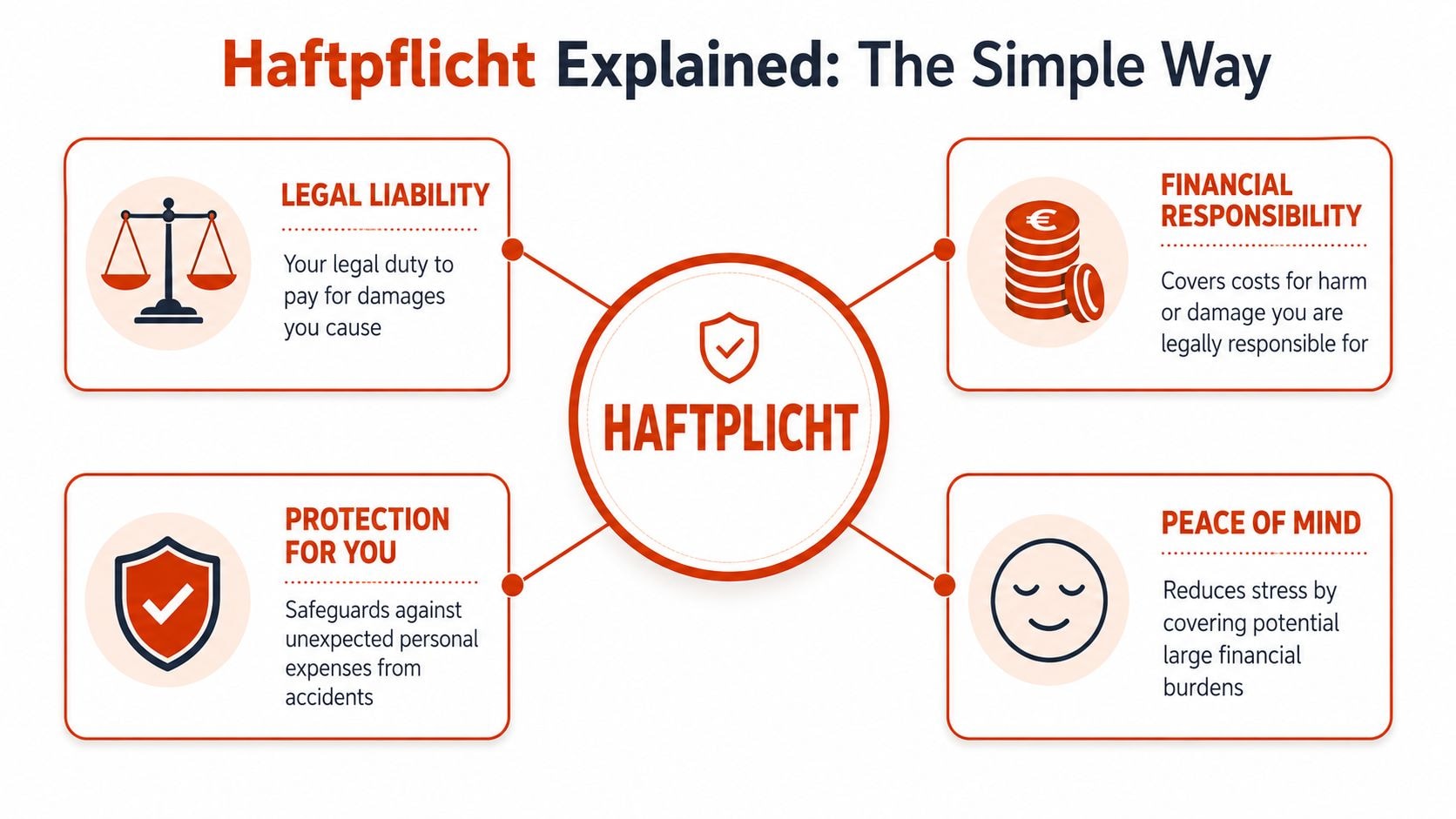
In plain English, Haftpflicht means liability. Think of it as your responsibility when your actions accidentally cause harm to someone else, to their property, or to their finances.
A simple example helps. You're visiting a friend in Neukölln and knock over their TV. Or you clip a parked bike with your own bike and send it into a car door. The key point isn't that you meant to do it. The key point is that damage happened, and someone may expect compensation.
Why people take it so seriously in Germany
In Germany, liability is a big deal because the financial consequences can become serious more quickly than many newcomers expect. As explained in Feather's guide to liability insurance in Germany, liability claims in Germany can become very expensive, especially when personal injury, property damage, or long-term consequences are involved. That is why many people treat private liability insurance as an important everyday protection, even when it is not generally mandatory for private individuals.
That's the part that changes this from “nice to have” to “I should sort this out.”
If you accidentally cause a major injury, the consequences aren't just about replacing an object. Claims can include long-term costs. In practice, that means one bad accident can follow you for years.
Here's a short explainer if you want to hear the idea in another format: watch it on YouTube.
Where the insurance comes in
This is why the extra word matters so much.
-
Haftpflicht = your legal responsibility
-
Haftpflichtversicherung = insurance for that responsibility
-
Privathaftpflichtversicherung = the private, everyday version most individuals buy
Practical rule: If you can picture yourself accidentally harming a person, damaging a rented place, or breaking someone else's expensive item, you can picture why liability insurance exists.
A good way to think about it is a bike helmet. The helmet doesn't stop you from being on the road. It protects you when something goes wrong on the road. Personal liability insurance works like that for everyday accidents.
Understanding Privathaftpflichtversicherung Your Everyday Shield
You will hear Germans shorten this to just Haftpflicht in everyday speech. That shortcut causes a lot of confusion for newcomers, because the word Haftpflicht by itself means liability, while Privathaftpflichtversicherung is the insurance policy that covers your private, everyday liability.
A simple way to separate the two is this. Haftpflicht is the bill you could legally owe after an accident. Privathaftpflichtversicherung is the policy that steps in if that accident is covered.
What a private liability policy usually covers
This is the policy many people mean when they say, “You should get Haftpflicht.” It is usually the most relevant liability insurance for students, employees, couples, and families living a normal private life in Germany.
It usually covers three broad areas: personal injury, property damage, and financial loss that follows from the damage you caused.
In daily life, that can mean things like:
-
You damage someone else's property, such as scratching a parked car while moving your bike.
-
You cause an accident and another person is injured.
-
The incident leads to extra costs for the other person, such as lost income after the injury.
That third point often confuses people. The easiest way to understand it is to treat it like a chain reaction. You do not just break an object. Your action also causes further costs for someone else.
Many policies also include or offer add-ons for situations newcomers often overlook, such as lost keys. In Germany, that can matter a lot if one key opens the front door, cellar, and several shared building areas.
What it usually does not cover
Private liability insurance is about damage you cause to other people or their property in your private life.
It usually does not pay for your own stuff. If your phone falls into the Spree, that is your own loss. It also does not replace car insurance, and it usually does not cover mistakes linked to certain professions or freelance work.
These quick checks help:
-
Your own belongings: usually no
-
Someone else's belongings: often yes, if you caused the damage
-
Car-related liability: separate insurance
-
Professional mistakes: often a separate policy
One question helps in most situations: Did I cause damage to someone else in my private life? If yes, this policy may apply.
Single policy or family policy
The right contract depends on who lives with you and who should be included. Some people need a single-person policy. Others choose a family policy so one contract covers a couple or children in the household.
Policy wording matters more than many newcomers expect. A partner may be covered, or may need to be named. Children may be included, but the age rules and living situation can matter. Unmarried couples are sometimes covered under one policy, but sometimes not, depending on the insurer and tariff.
That is why it helps to read this product less like a label and more like a household setup. You are not only buying “Haftpflicht.” You are choosing who is inside the safety net.
SettlyGo can help you understand German wording, prepare questions, or organize documents. It does not recommend insurance providers, compare tariffs, advise on coverage amounts, or handle claims strategy.
If you need help understanding a provider's wording or handling a call in German, German phone call help is often the easiest way to avoid misunderstandings.
Other Liability Insurance Types You Might See
A lot of newcomers hit the same snag here. They learn that Haftpflicht means liability, then they see more German words with “Haftpflicht” in them and assume they are all the same insurance with slightly different labels.
They are different products, or different parts of a product.
A simple way to sort them is this: Haftpflicht is the broad idea of being responsible for damage you cause. Privathaftpflichtversicherung is the everyday private insurance policy many people mean when they say “Haftpflicht.” The terms below sit next to that policy, not inside the same box by default.
Tierhalterhaftpflicht
This means animal owner liability insurance.
For many newcomers, the practical example is dog insurance. If your dog runs into the street, knocks someone over, or damages another person's property, this is the kind of policy that may matter. In some German states, dog owners are required to have this cover, so it is worth checking the local rules for the place where you live.
The key point is simple. Your private liability policy does not automatically mean “all liability for every situation in life.” Pets can be treated as their own risk category.
Berufshaftpflicht
This means professional liability insurance.
It applies to work, not private life. If you are a freelancer, consultant, therapist, designer, or in another profession where a mistake could cost a client money, this is the term to look at. A private policy is for everyday accidents, like spilling something on a friend's laptop. A professional policy is for work-related harm, like giving advice, making an error in a project, or causing a financial loss through your job.
If your income depends on your work, do not guess from the title alone. Check whether your profession has its own insurance expectations, especially if you are self-employed or work in a regulated field.
Mietsachschäden
This term means damage to rented property.
Many renters get mixed up, because Mietsachschäden is usually not a separate insurance product you go out and buy on its own. In many cases, it is a coverage area inside a good Privathaftpflichtversicherung policy.
That distinction matters. If your rental contract mentions liability and rented property damage, the main question is often not “Do I need a new kind of Haftpflicht?” but “Does my private liability policy include damage to rented property, and how far does that cover go?”
A typical example would be accidentally damaging an internal door, built-in fixture, or flooring in your rented flat.
If you are collecting papers for a move, Anmeldung, or a housing appointment, a good documents checklist for Berlin appointments can help you see which insurance proof is worth bringing.
According to Settle in Berlin's guide to personal liability insurance, rental-related damage is one of the policy details renters should check closely. That is a better way to read this term. Treat it less like a separate product name and more like a line item inside the private policy you may already be comparing.
Types of German Liability Insurance at a Glance
| Insurance Type (German) | English Name | What it usually refers to | Example Scenario |
|---|---|---|---|
| Privathaftpflichtversicherung | Personal liability insurance | Your private everyday liability cover | You damage a friend's laptop or cause an accident in daily life |
| Tierhalterhaftpflicht | Pet owner liability insurance | Liability linked to owning certain animals | Your dog causes damage or injures someone |
| Berufshaftpflicht | Professional liability insurance | Liability linked to your job or freelance work | A work mistake causes a client loss |
| Mietsachschäden | Rental property damage coverage | A coverage area often included in private liability policies | You damage part of your rented apartment |
If a landlord, insurer, or form uses the word Haftpflicht, pause and translate the full phrase, not just the headline word. That small habit prevents a lot of expensive misunderstanding.
Your Practical Toolkit Phrases and Next Steps
A lot of the stress around Haftpflicht comes from not knowing the German words around it. Once you know the small vocabulary set, things get much easier.
A small phrasebook for real life
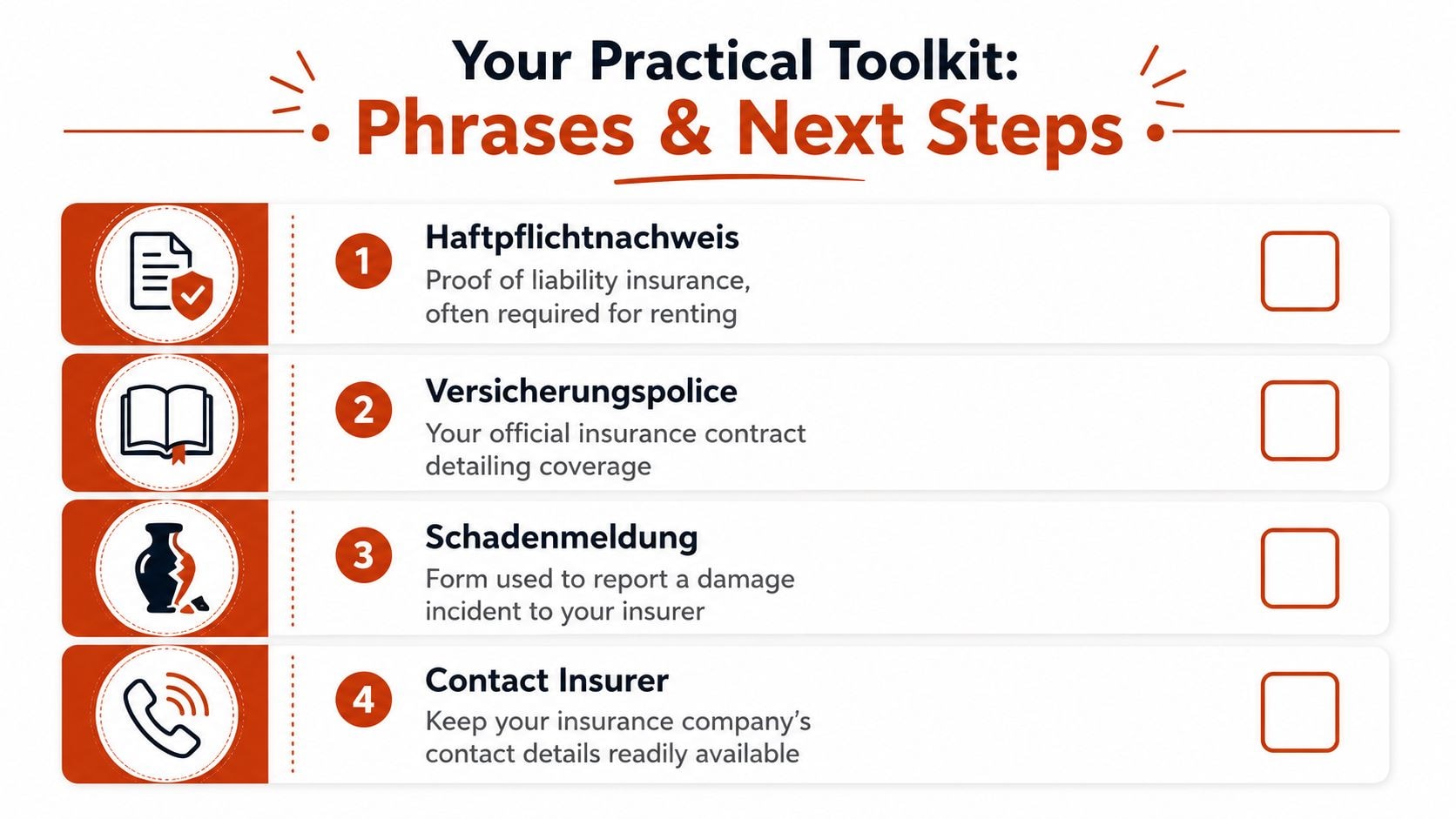
Here are the terms that show up most often:
-
Haftpflicht: Liability. Your responsibility for damage you cause.
-
Haftpflichtversicherung: Liability insurance.
-
Privathaftpflichtversicherung: Personal liability insurance.
-
Haftpflichtnachweis: Proof of liability insurance.
-
Versicherungspolice: Insurance policy document.
-
Schadenmeldung: Damage report or claim report.
-
Deckungssumme: Coverage amount.
-
Mietsachschäden: Damage to rented property.
-
Schlüsselverlust: Key loss.
You don't need to sound fluent. You just need to recognize what the other person is referring to.
“I think they're asking for proof of personal liability insurance” is often the real meaning behind a much more intimidating German sentence.
A simple decision checklist
If you're not sure what applies to you, use this quick check.
-
You rent a flat or room: Check whether your contract or landlord asks for liability insurance or mentions rental property damage.
-
You live a normal city life: Private liability insurance is usually the relevant starting point.
-
You own a dog: Check whether dog liability applies in your region.
-
You freelance or work in a regulated profession: Ask a qualified professional whether you need professional liability too.
-
You're comparing policies: Look closely at rental damage, lost keys, and who is covered under the policy.
-
You're still confused by the German paperwork: Get the wording translated into plain English before you sign or send anything.
A simple document checklist also helps when you're managing insurance requests together with other admin tasks. If you're preparing for appointments, housing paperwork, or bureaucratic follow-up, this documents checklist for Berlin appointments is a useful place to organize everything in one spot.
When practical help is enough and when you need a professional
Some tasks are practical. Some need a licensed expert.
Practical support is enough when you need help understanding a landlord email, organizing documents, preparing questions before a call, or translating everyday insurance-related wording in a non-legal setting.
Use a qualified professional when you need advice on which policy to buy, how much coverage is financially appropriate for your situation, whether a professional policy is legally required for your work, or anything involving legal disputes or claims handling strategy.
That distinction matters. Friendly admin help can reduce stress. It doesn't replace legal, tax, immigration, medical, certified translation, or licensed insurance advice.
Your Liability Safety Net in Germany
The big takeaway is simple. Haftpflicht in English means liability, but the product most newcomers usually need is Privathaftpflichtversicherung, which means personal liability insurance.
Once you separate those two ideas, the whole topic becomes much less confusing. One word describes your responsibility if you cause damage. The other describes the insurance that helps protect you from the financial consequences.
For life in Germany, that matters because paperwork often assumes you already know the system. Rental contracts, landlord emails, and insurance documents rarely slow down and explain the vocabulary. You often have to decode it yourself while also dealing with moving, Anmeldung, bank appointments, and everything else.
The good news is that this is manageable. You don't need to become an insurance expert overnight. You just need to recognize what's being asked, confirm whether private liability insurance is the right fit for your situation, and get proper professional advice when the choice goes beyond simple admin.
If you need help with the practical side of Germany, from calls and letters to appointment prep and landlord communication, it also helps to understand how SettlyGo works before you book support.
If a German insurance term, landlord message, or apartment document has you stuck, SettlyGo can help with the practical side. That includes understanding everyday German bureaucracy, preparing calls, organizing documents, and handling landlord communication in Berlin. SettlyGo is not a law firm, insurance broker, certified translation service, tax advisor, immigration advisor, or medical advisor. For policy advice, legal questions, claims disputes, or coverage decisions, use a qualified professional. But if you want calm, human help with what to do next, you can book a SettlyGo helper.
Need practical help in Berlin?
Book a verified SettlyGo helper for German phone calls, appointments, landlord communication, apartment viewings, and document preparation.