Moving with Pets in Germany: Essential Guide 2026
June 28, 2026 · 17 min read

You've got flights to compare, a stack of documents open on your laptop, and one question keeps cutting through everything else: how hard is it to move to Germany with a pet? For most newcomers, the stress isn't only the travel. It's the chain reaction after arrival. Will the landlord say yes. Will the Bürgeramt letter make sense. Will the vet receptionist understand you on the phone.
That mix of logistics and bureaucracy catches people off guard.
The reassuring part is that pets in Germany are normal, visible, and well integrated into daily life. Germany has the largest pet population in the EU, with 44% of households owning at least one pet, and cats are the most popular, with 15.9 million cats compared with 10.4 million dogs according to Statista's overview of pets by type in Germany. The difficult part isn't whether pets belong here. It's handling the paperwork, timing, housing conversations, and local admin without missing a step.
Welcome to Germany a Guide for You and Your Four-Legged Friend
A lot of pet moves start the same way. Someone is excited about a new job, a master's program, or a family move to Berlin. Then the pet question turns the whole relocation into something more personal. You're not just choosing luggage or booking a train from the airport. You're deciding how to move a family member safely and legally.
Why the move feels harder than it should
A long to-do list is manageable if the path is clear. The problem with pets in Germany is that the path usually isn't clear at first. Travel documents sit in one bucket. Housing sits in another. Local registration sits somewhere else. Then the German letters start arriving and none of them look urgent until one turns out to be important.
Practical rule: treat your pet move as three separate projects. Travel compliance, housing approval, and local admin.
That framing helps because each project has different people involved. Your vet handles one part. Your airline may ask for another. A Berlin landlord has completely different concerns. The city office doesn't care how charming your dog is. It cares whether your paperwork is complete.
What usually causes the real stress
The pet itself usually isn't the hardest part. The friction comes from moments like these:
-
A landlord replies vaguely: “Pets by agreement” sounds promising, but it isn't approval.
-
An appointment becomes urgent: your city registration affects other basics of daily life.
-
A German letter lands in the mailbox: you can guess what it's about, but guessing isn't enough.
-
A phone call feels high stakes: calling a tax office, insurer, or vet in German is much harder when you're unsure which words matter.
People often expect import rules to be the main challenge. In practice, the longer struggle is getting settled smoothly once the pet has arrived.
If you approach the move in the right order, it becomes much more manageable. First, make sure your travel documents are accepted. Then handle your own registration and any local pet obligations. After that, focus on the Berlin reality that catches many newcomers by surprise: finding housing that works for both you and your animal.
The First Hurdle Importing Your Pet Correctly
Import mistakes are expensive because they usually show up late. A microchip that doesn't match the paperwork, a vaccination timeline that doesn't work, or the wrong certificate format can turn a smooth trip into a scramble.
Start with the travel category that applies to you
For most newcomers, the move falls under non-commercial movement. In plain terms, that usually means you're moving with your own pet, not shipping animals for sale or transfer. The main official EU guidance is on Your Europe's page for travelling with pets and other animals and the European Commission's page on bringing pet dogs, cats and ferrets into the EU from a non-EU country.
The first split is simple:
| Travel route | What to focus on |
|---|---|
| From an EU country | Valid pet passport, rabies status, and identity match |
| From a non-EU country | Official health certificate, rabies timing, and any additional entry requirements |
If you are still planning the trip, keep the travel checklist short and official:
-
Microchip first. Check that the microchip is readable and matches every document.
-
Rabies vaccination next. Make sure the vaccination is valid for travel.
-
Official entry document after that. Depending on the route, this is usually an EU pet passport or an official health certificate.
-
Airline and route check last. Airline crate and check-in rules can still derail a well-prepared trip.
Before you fly, keep a printed set and a digital set of everything. Airports are not the place to discover that one stamp is sitting in checked luggage or in an email attachment you can't open.
The documents people mix up most often
Within the EU, many travelers rely on the EU Pet Passport. From outside the EU, people often need an Animal Health Certificate or equivalent official veterinary paperwork for entry. The exact form matters. “I have vaccination records” is not the same thing as “I have the required entry document.”
A useful way to think about it is this:
-
Vaccination record: shows medical history.
-
Pet passport or official certificate: supports legal travel acceptance.
-
Microchip number: ties the animal to the paperwork.
Bring the original documents in a dedicated folder. Don't rely on screenshots alone.
If your pet has a more complicated history, an older chip, prior vaccination in another country, or a connecting route, resolve questions before departure with the relevant vet, airline, or official authority. Border staff won't untangle a timeline for you.
The ESA misunderstanding that creates problems
Do not assume an Emotional Support Animal letter from another country will give your pet special housing or access rights in Germany. If your situation depends on assistance-animal rules, check official guidance or speak with a qualified professional before relying on it.
That matters in two ways.
First, don't assume an ESA letter from another country will persuade a Berlin landlord. It may not. Second, don't build your travel or housing plan around rights that may not apply in Germany. If your situation depends on formal assistance-animal status, confirm the rules before you rely on them.
This doesn't mean moving with your pet is unrealistic. It means your success depends on proper paperwork and clear communication, not on expecting an exception that may not carry over internationally.
You've Arrived Now What Local Registration and Dog Tax
The first week after arrival tends to blur together. Keys, SIM card, transport card, unpacking. Then local admin starts to matter.
Your own registration comes first
Before dealing with pet-related local tasks, handle your Anmeldung, your address registration. In Berlin, the official information and booking portal is on Berlin.de's registration office page. The registration certificate you receive is often needed for basics like tax ID processing, bank setup, and many contracts.
Even if appointments are hard to find, Anmeldung is still an important early step. Book the earliest suitable appointment and keep records of your attempt if availability is limited.
If you're still figuring out the appointment process, this Anmeldung in Berlin step by step guide is a useful starting point.
What dog owners should handle next
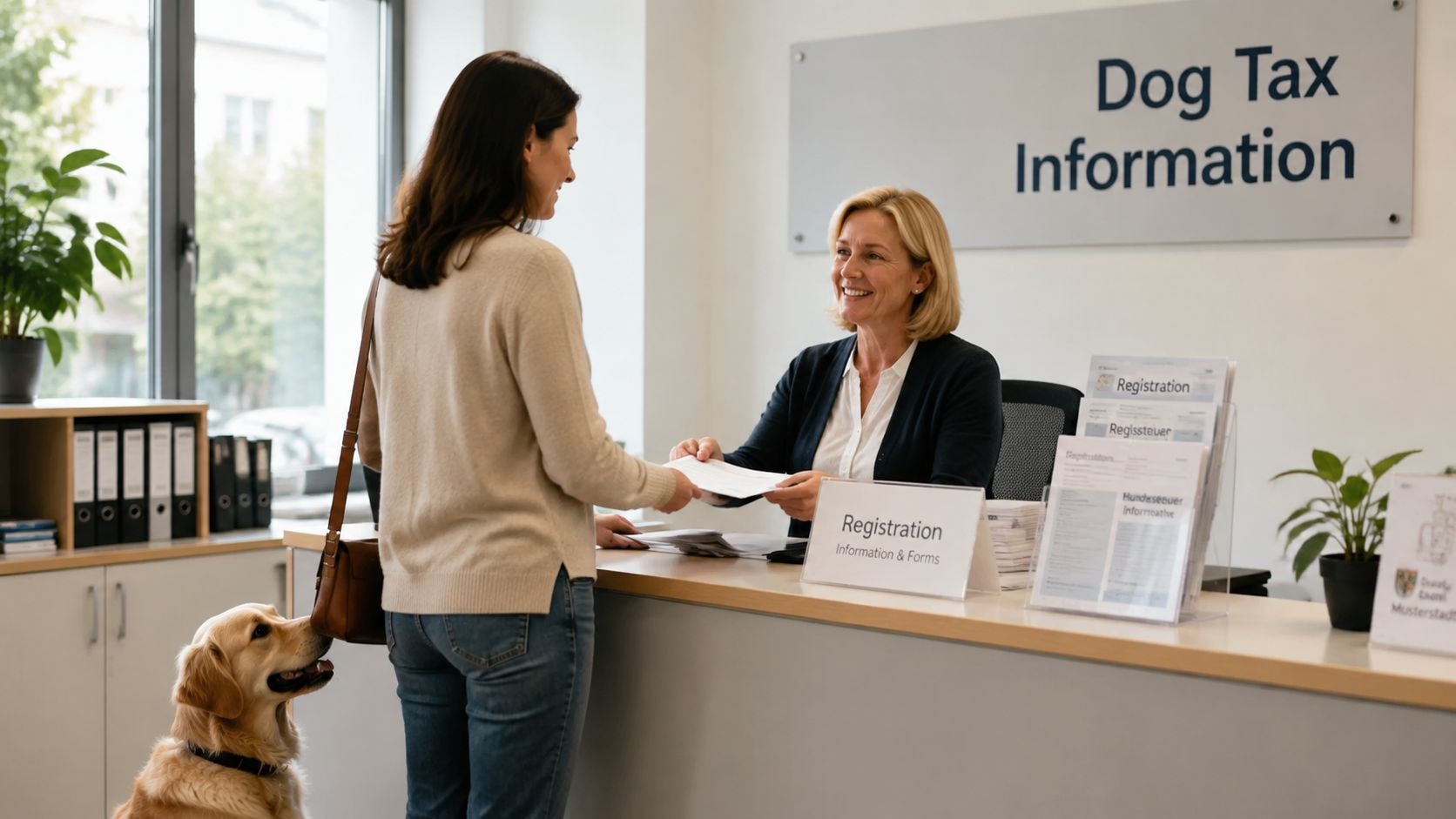
If you have a dog, your next local task is usually Hundesteuer, the municipal dog tax. In Berlin, the official rules are set out on the city portal for dog registration and dog tax. Since 1 January 2024, registration in the central dog register is linked to tax registration in Berlin, so the process is more connected than many older guides suggest.
Typical things you may need include:
-
Your registered address
-
Your dog's identifying details
-
The date the dog started living with you in Berlin
-
Supporting documents if the office asks for them
For many dog owners, the useful points to know early are practical rather than complicated: there is a registration deadline, the annual tax amount depends on the number of dogs, and older advice about separate tax badges may no longer be current. Check the current Berlin rules directly before you submit anything.
If your dog belongs to a breed category with special local rules, don't assume Berlin treats it the same way your home country does. Check the official Berlin requirements directly and, where necessary, use a qualified professional for legal interpretation.
The letters that tend to confuse newcomers
The hard part often isn't registering the dog. It's understanding the follow-up letter.
A typical German admin letter may confirm registration, request more information, or state a payment amount and due date. The wording can feel formal even when the issue is routine. Don't ignore those letters because they “look tax-like.” They usually are.
If a letter mentions a deadline, payment reference, or missing information, treat it as active until you fully understand it.
A good habit is to create one folder, digital and paper, for all pet-related local admin. Include tax letters, registration confirmations, insurance correspondence, and vet invoices. That sounds basic, but it prevents the common problem of searching across email, WhatsApp, and three apartment drawers when an office refers to an older letter.
Finding a Pet-Friendly Home in Berlin
For many newcomers, this is the part that hurts most. Not because it's impossible, but because it combines Berlin's tight housing market with landlord caution.
The key fact is simple: finding a pet-friendly apartment is the hardest barrier for many newcomers, because many listings are marked “Nach Vereinbarung”, or by agreement, and landlords often prefer non-pet tenants, as described in this report on Germany's pet market and rental bottlenecks for pet owners.
What Nach Vereinbarung usually means in practice
It doesn't mean yes. It also doesn't always mean no.
In real apartment searches, Nach Vereinbarung usually means the landlord wants discretion. They may consider the animal's size, species, age, behavior, or compare your application with another one that involves no pet at all. If ten applicants look financially similar, the applicant without a pet often feels easier to approve.
That's frustrating, but it tells you how to improve your position. Don't treat the pet as a footnote. Present it properly.
How to make a landlord feel safer saying yes
The strongest applications reduce uncertainty.
A useful pet CV can include:
-
A clear photo that makes the animal feel familiar, not abstract
-
Basic profile details such as age, breed, size, and whether the pet is indoor-only
-
Training or behavior notes if relevant
-
Prior housing history showing the pet lived in rentals without issue
-
A short former landlord note if you can get one
Keep the tone calm and factual. “My dog is very sweet” doesn't help much. “My dog is house-trained, used to apartment living, and I can provide prior landlord confirmation” works better.
A viewing matters too. If a landlord or agent seems hesitant, answer directly. Say whether the dog barks often. Say whether the cat damages furniture. Vagueness creates doubt.
A pet-friendly application is really a risk-reduction exercise. The landlord needs to believe your animal won't become their problem.
If you're apartment hunting in Berlin, communication is where many applications fail. Emails sound too vague. Important questions don't get asked at the viewing. Someone says yes verbally, but the written contract stays unclear. In that situation, practical support during a viewing can make a real difference, especially when you need help asking direct questions on site. For that, apartment viewing support in Berlin is the most relevant kind of help.
A quick decision guide for listings
| Listing wording | What it usually means | Best next move |
|---|---|---|
| Pets allowed | Promising, but still confirm species and size | Ask for written confirmation before signing |
| Nach Vereinbarung | Case-by-case decision | Send a pet CV early and ask directly |
| No pets | High-friction option | Usually not worth building your search around |
| Silent on pets | Unclear | Raise it before commitment, not after |
The practical mistake is waiting until contract stage to mention the pet. Raise it early enough to avoid wasted time, but with enough structure that the landlord can say yes confidently.
Vets Services and Daily Life with Your Pet
Once housing is sorted, daily life gets easier fast. Berlin has plenty of pet owners, pet shops, vets, and routines that will feel normal again once you're set up.
Build your local pet routine early
Don't wait for an emergency to find a Tierarzt. Pick a regular vet soon after arrival, save the clinic's phone number, and identify a nearby Tierklinik for out-of-hours situations. If you're more comfortable in English, ask that question directly when booking. Some clinics handle English easily, others less so.
Your first month is a good time to sort out:
-
A regular vet
-
An emergency clinic
-
A nearby pet supply store
-
A fallback pet sitter or boarding option
-
A route for daily walks or transport
That small setup work pays off later. The worst time to search for an emergency clinic is when your dog has eaten something strange at night.
What a first vet setup should include
A first non-urgent appointment is useful even if your pet seems fine. It gives the clinic a record, lets you check how communication works, and helps you understand local expectations for prescriptions, scheduling, and follow-up care.
Bring a compact file with:
-
Import and vaccination documents
-
Past medical records
-
Current medication list
-
Any food allergies or chronic conditions
If your pet has a complicated treatment history, ask the clinic what format they prefer for older records. Some practices are happy with English notes. Others may want a cleaner summary. If a certified translation is ever required for a formal purpose, use a qualified certified translation provider rather than relying on informal help.
Keep one short medical summary in plain English. It helps when stress makes it hard to explain details quickly.
Everyday life in Berlin with a dog or cat
For supplies, newcomers usually start with supermarkets, drugstores, and chains like Fressnapf, then adjust based on what their pet tolerates. If you prefer ordering online, that's normal too. The German pet industry generated around 7 billion euros in 2024, with 1.5 billion euros in online sales, and 60% of pet owners shop both online and in physical stores, according to Interzoo's report on the German pet market in 2024.
Public transport rules, carrier expectations, and leash norms are easier to learn locally than from generic internet advice. Watch what Berlin pet owners do in your district, then confirm official rules where needed. In practice, pet owners adapt quickly once they've done a few vet visits, a few supply runs, and a few BVG trips.
Understanding Costs Insurance and Your Legal Duties
People often ask for one neat budget number. That's not how this works in practice. Costs depend on the animal, the city, the housing situation, and whether anything goes wrong medically.
Where the spending usually goes
The recurring categories are predictable even if the exact amounts vary:
| Cost area | What to expect |
|---|---|
| Food and supplies | Ongoing monthly spending, with premium and specialty products costing more |
| Routine vet care | Checkups, vaccinations, and standard consultations |
| Unexpected treatment | The category that can disrupt a budget fastest |
| Dog-specific local duties | Registration, tax, and any municipality-specific admin |
| Housing-related costs | Cleaning, deposit concerns, or extra friction in the rental search |
The practical budgeting mistake is focusing only on travel or import costs. The complete financial picture starts after arrival. Food quality, a first vet appointment, replacement gear, and municipal admin add up even when the move itself went smoothly.
Insurance questions newcomers should separate clearly
In Germany, people often mix up three different ideas:
-
Pet health insurance
-
Surgery-only pet cover
-
Dog liability insurance
They solve different problems. Health-related cover concerns veterinary treatment. Liability insurance concerns damage your dog causes to other people or property. Those are not interchangeable.
For dog owners in Berlin, liability insurance is a topic to take seriously. Settling the basics early is much easier than trying to understand policy terms in a rush after an incident. Still, this is the point where boundaries matter. Choosing a policy, comparing legal coverage details, or deciding what is suitable for your case is work for an insurer or qualified insurance professional. Practical language support can help with first contact and basic information gathering, but it doesn't replace professional advice.
A simple rule works well here: use practical support for calling, clarifying, booking, and organizing, then use a qualified professional for legal interpretation, policy advice, or disputes.
Your Pet Relocation Checklist and Getting Help
The process feels overwhelming when everything sits in your head at once. It gets much easier when you turn it into a sequence.
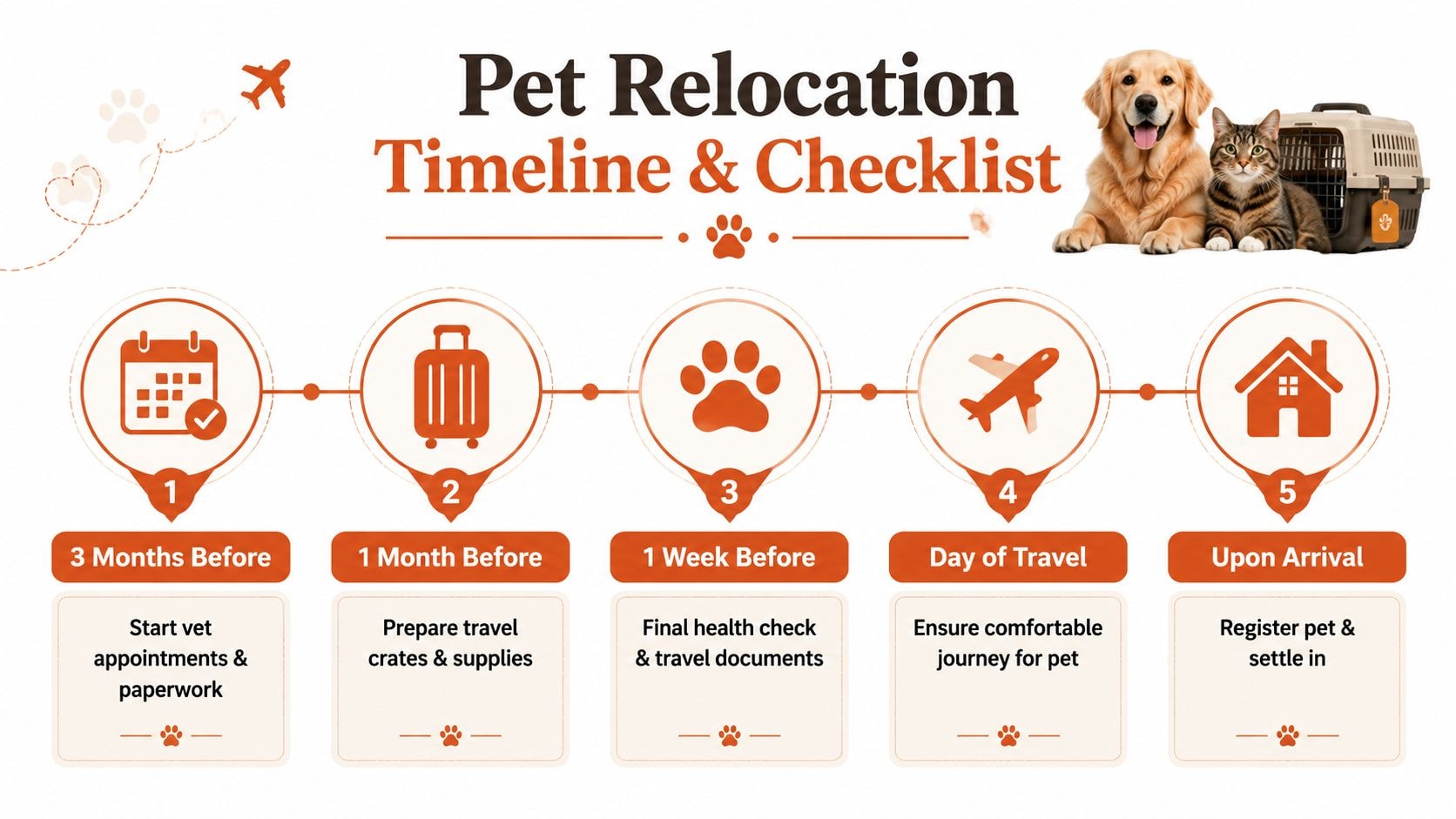
Pet relocation timeline
| Phase | Key Actions |
|---|---|
| Before travel planning | Confirm your route, airline rules, and the official veterinary requirements that apply to your origin country |
| Early preparation | Check the microchip, vaccination status, and required official documents |
| Final pre-departure stage | Organize originals, print backups, prepare crate and travel supplies |
| Arrival week | Settle housing, complete your own local registration, and organize pet records |
| First month | Handle dog-related municipal admin if relevant, find a vet, and build your daily routine |
The smartest way to use this timeline is to separate must-have for entry from must-have for settling in. That keeps urgent travel compliance from getting mixed up with post-arrival tasks like landlord communication or city paperwork.
First month checklist in Germany
Your first month with pets in Germany usually runs more smoothly if you do these in order:
-
Store every document together. Keep travel paperwork, landlord approval, registration letters, and vet records in one place.
-
Register yourself first. Your local registration affects too many other basics to delay casually.
-
Handle dog admin promptly. If you have a dog, check Berlin's current registration and tax process through the official city service portal.
-
Book a non-urgent vet visit. It's easier to solve communication issues before there's a real problem.
-
Get housing terms in writing. If a landlord approved the pet, keep that written record.
-
Sort your support network. Identify a clinic, pet store, and backup sitter or friend.
If Berlin still feels like a maze, a wider newcomer checklist helps. This first 30 days in Berlin checklist is useful for the non-pet admin that still affects your pet move, especially registration, banking, and general setup.
The move gets lighter once the unknowns become appointments, folders, and checklists.
The big takeaway is simple. Import rules matter, but they're only the first gate. The longer challenge is practical: communicating with landlords, dealing with German admin, understanding letters, and getting everyday tasks done without losing time or confidence.
If you need practical help with the parts that usually overwhelm newcomers, such as German phone calls, appointment preparation, landlord communication, apartment viewings, or understanding official letters, SettlyGo is built for exactly that kind of support in Berlin. SettlyGo does not provide legal advice, medical or veterinary advice, insurance brokerage, tax advice, immigration advice, or certified translation, so for those matters, use a qualified professional.
Need practical help in Berlin?
Book a verified SettlyGo helper for German phone calls, appointments, landlord communication, apartment viewings, and document preparation.