Dog Tax in Germany: 2026 Hundesteuer Guide
July 9, 2026 · 11 min read

You finally found a flat where dogs are allowed. Your dog has settled into the new routine. You've worked out which Späti sells the good treats, which park is calm in the morning, and which U-Bahn times are least chaotic.
Then someone mentions Hundesteuer, the dog tax in Germany, and the mood drops a little.
For many newcomers in Berlin, this is exactly the kind of surprise that makes German bureaucracy feel endless. You're not just caring for your dog. You're suddenly decoding a local tax, figuring out which office handles it, and worrying about what happens if you miss a deadline. The good news is that Hundesteuer is manageable once you understand the logic behind it. If you're still juggling the basics of settling in, this first 30 days in Berlin checklist can help you keep the bigger picture organized too.
Welcome to Germany Your Dog Needs to Register Too
The first shock is usually not the tax itself. It's the fact that a dog needs to be registered with the city at all.
A lot of people arrive in Berlin assuming that if their dog is chipped, vaccinated, and already part of the household, that's enough. Then a neighbor, a shelter, or a relocation forum mentions Hundesteuer, and suddenly it sounds like one more official task you were never warned about. That reaction is normal.
The Berlin newcomer version of this problem
A common Berlin story goes like this. You move into a new apartment, update your address, sort internet, sort health insurance, sort your Anmeldung, and then realize your dog has its own administrative life too. The city wants to know that the dog is there, and once the dog is registered, the tax follows.
That can feel oddly personal at first. Why does the city care how many dogs someone has?
You're not being singled out. Germany treats dog ownership as something that comes with formal local responsibilities.
Why this feels more stressful than it should
Hundesteuer becomes overwhelming when it arrives mixed with other bureaucracy. The forms are local. The rules differ by municipality. The office names are unfamiliar. Even the basic question, “Who do I contact?”, can turn into an afternoon of tab-switching between district websites.
If you're new to the country, this process can also trigger the same practical problems as any other German admin task:
-
Language friction: The form or follow-up letter may only make sense once someone explains the key terms.
-
Office confusion: You may see Rathaus, Stadtsteueramt, or municipal tax office and wonder whether these are different places.
-
Timing stress: If you've just moved or adopted a dog, it's easy to miss the registration window without realizing it.
The important part is this. Dog tax in Germany is real, local, and routine. Once you know how it works, it becomes another checklist item, not a looming mystery.
Understanding the German Dog Tax or Hundesteuer
Hundesteuer is a municipal tax, not a federal one. That means your city or municipality sets the rules, the rates, and the registration process. That's why Berlin, Munich, Hamburg, Hannover, and smaller towns can all handle dog tax a little differently.
What the tax is actually for
Many newcomers get annoyed. They pay the tax and expect a visible dog-specific benefit in return, like better dog parks, cleaner off-leash areas, or more public waste-bag stations.
That's usually not how it works.
Hundesteuer is a municipal tax. The revenue generally goes into the municipality’s overall budget rather than being reserved exclusively for dog parks, waste-bag stations, or other dog-specific services.
Practical rule: Don't think of Hundesteuer as a membership fee for dog infrastructure. Think of it as a local ownership tax that helps fund municipal spending more broadly.
Why cities use it
Cities use this tax for two practical reasons.
First, it raises municipal revenue. Second, it signals that dog ownership is a regulated responsibility, not just a private lifestyle choice. Because Hundesteuer is municipal, rates and additional-dog or dangerous-dog rules can differ significantly between cities.
That doesn't mean every city is hostile to dogs. Berlin is full of dogs. It just means the city treats dog ownership as something that should be registered, trackable, and financially acknowledged.
For newcomers, this mindset matters. If you expect the tax to behave like a directly earmarked service fee, the system feels irrational. If you understand it as a local municipal tax, the rules make more sense, even if they still aren't charming.
Dog Tax Rates A City by City Comparison
The fastest way to understand dog tax in Germany is to stop looking for a single national price. There isn't one. Costs depend on the municipality, and the same household setup can cost something very different from one city to the next.
Berlin is relatively easy to remember. Other cities get more expensive, especially for additional dogs or certain listed breeds.
Annual Dog Tax in Major German Cities
| City | Standard annual dog tax | Dangerous-dog rate |
|---|---|---|
| Berlin | €120 for the first dog; €180 for each additional dog | Berlin’s dog-tax information does not list a separate higher tax rate |
| Munich | €100 per dog | €800 per dog |
| Hamburg | €90 per dog | €600 per dog |
| Wuppertal | €160 for one dog; €288 per dog when two or more dogs are kept | €1,000 per dog |
Official sources: Berlin Senate Department for Finance, City of Munich, Hamburg Ministry of Finance, and City of Wuppertal.
The Berlin numbers newcomers usually need first
In Berlin, the dog tax is €120 per year for the first dog and €180 per year for every additional dog, according to the Berlin Senate Department for Finance.
If you're living in Berlin and only have one dog, this is usually the first number you need for your budget.
Why the second dog often costs more
German municipalities often use a tiered structure. The first dog has one annual price. The second dog costs more. In some places, the jump is modest. In others, it's steep.
That structure is deliberate. Cities use pricing to discourage higher ownership density and to reflect what they consider greater administrative or public-space impact.
If you're comparing apartments and planning to bring more than one dog, check the municipality before you sign the lease. The tax question is local, not national.
Dangerous-dog rules vary by municipality
Dangerous-dog rules are separate from the standard Berlin dog-tax rate. Berlin has additional legal requirements for dogs classified as dangerous, but the official Berlin dog-tax information does not list a separate higher Hundesteuer rate for them. Other municipalities, including Munich, Hamburg, and Wuppertal, do apply substantially higher tax rates to dangerous dogs.
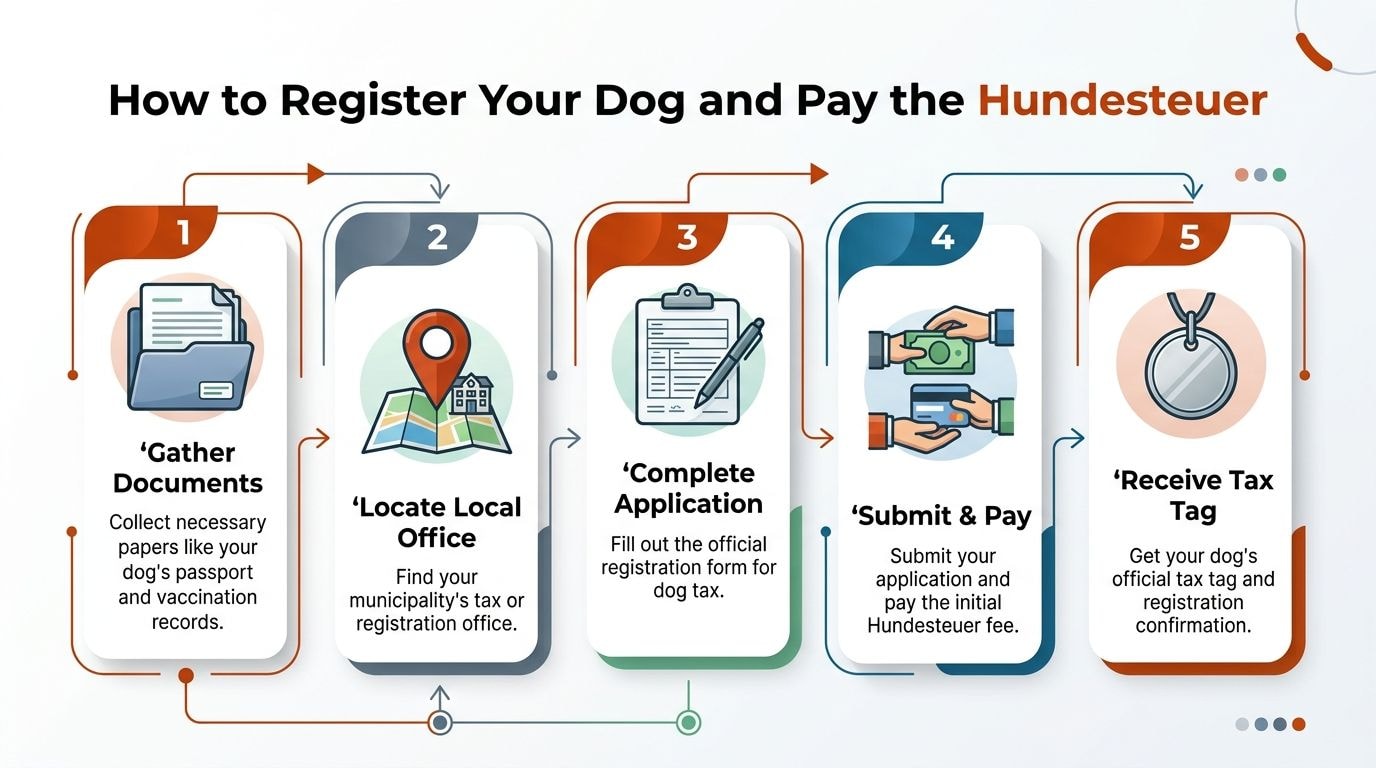
How to Register Your Dog and Pay the Hundesteuer
This part is the one that is truly essential. Not the theory. Not the politics. Just the sequence.
The registration process is local, but the basic flow is similar across Germany. You tell the municipality that you have a dog, you provide the requested details, and then the city sends the tax assessment and payment information.
Know your deadline first
In Berlin, you must register your dog for tax purposes within one month after acquiring it or moving to Berlin. If the dog is younger than three months, registration must be completed within its first four months.
Berlin also requires dogs kept permanently in the city to be registered in the central Hunderegister. Since 1 January 2024, registration in the Hunderegister also counts as the tax registration with the Finanzamt. If you register only through ELSTER or directly with the Finanzamt, you must still register the dog separately in the Hunderegister.
Hunderegister registration costs €17.50 per dog online or €26.50 per dog when completed by post or telephone. This registration fee is separate from the annual Hundesteuer.
Sources: Berlin dog tax registration service and Berlin Hunderegister service.
That deadline matters more than most newcomers expect. People often focus on the moving process itself and forget that the dog's paperwork also needs an address update.
What you'll usually need
Municipal websites vary, but in practice it helps to gather everything before you start. That way you're not halfway through a form while looking for a chip number or old registration detail.
A simple prep list:
-
Your personal details: Name, address, and contact information.
-
Your dog's details: Name, breed, age or date of birth, and sometimes color or identifying features.
-
Acquisition information: When you got the dog, or when the dog moved with you to the municipality.
-
Existing dog documents: Pet passport, vaccination record, chip information, or prior registration paperwork if you moved from another city.
-
Bank or payment details: Some municipalities allow or encourage direct debit setup.
If you've recently handled your own address registration, the admin rhythm will feel familiar. This is also one of those moments where it helps to have your documents in one folder before you start. If your wider Berlin setup is still in progress, practical prep support like an Anmeldung helper in Berlin can make the surrounding paperwork load easier to manage.
What happens after registration
Once the city processes your registration, you'll usually receive a tax assessment letter. In German, this is often called a Steuerbescheid. That letter tells you what the city expects you to pay and how payment should be made.
Some German municipalities may still use dog-tax tags, but Berlin does not. Since 1 January 2024, dogs in Berlin no longer need to carry a Hundesteuermarke, and Berlin’s Finanzämter no longer issue one.
A few practical habits help here:
-
Read every letter carefully. The payment date and reference details matter.
-
Save a copy of your registration. Digital copy, paper copy, or both.
-
Check whether payment repeats automatically. Some cities bill annually in a recurring pattern.
If a form, letter, or city email is unclear, deal with it early. German bureaucracy is much easier when the question is still small.
Dog Tax Exemptions and Reductions Who Qualifies
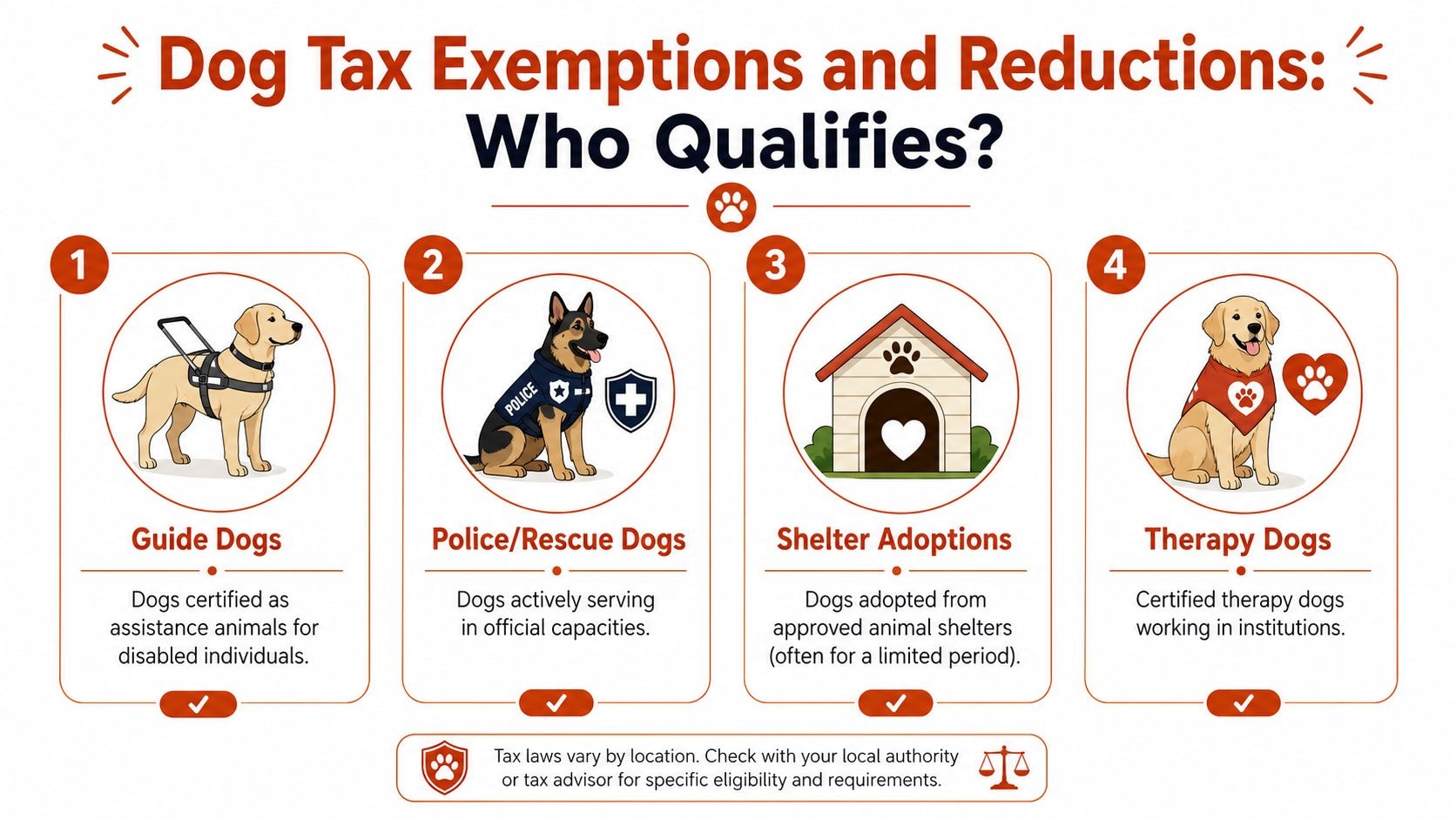
In Berlin, exemptions may apply to qualifying guide or assistance dogs, certain trained or trainee rescue dogs, dogs adopted from qualifying animal shelters, and dogs kept by people receiving certain listed social benefits. A dog adopted from a qualifying shelter can be exempt for five calendar years. Exemptions are not automatic; an application and supporting evidence are required.
Source: Berlin dog tax exemption service.
Penalties for Not Registering Your Dog
Ignoring Hundesteuer usually doesn't make the problem disappear. It just changes the tone of the letters.
Failing to register a dog can be treated as an administrative offense. Even if the first contact from the city is only a request for clarification, it's still worth taking seriously. Municipal systems are built around registration, and once the city believes a dog should have been declared, you may need to respond quickly and clearly.
The real stress point is usually the letter
For many newcomers, the worst part isn't the money. It's getting an official German letter with unfamiliar wording and not knowing whether it's a reminder, a warning, or a penalty notice.
That confusion leads people to freeze, delay, or misread what they're supposed to do next.
A sensible response looks like this:
-
Open it immediately: Don't let the envelope sit for a week because it looks formal.
-
Check the sender: Municipality, tax office, or another local authority.
-
Look for dates and requested actions: Reply, register, submit documents, or pay.
-
Keep copies of everything you send back: Especially if you're correcting missing information.
A formal letter becomes more manageable once the routine wording, visible deadline, requested documents, and next practical step are identified. This is not tax advice, legal interpretation, or certified translation.
If the notice suggests a formal penalty, a disputed charge, or a more complex legal issue, use a qualified professional. Practical language help is useful. Legal advice is a separate service.
Making German Bureaucracy Less Stressful
Hundesteuer feels much smaller once you reduce it to a checklist. Check the local rule. Register on time. Keep the paperwork. Don't assume an exemption without confirmation.
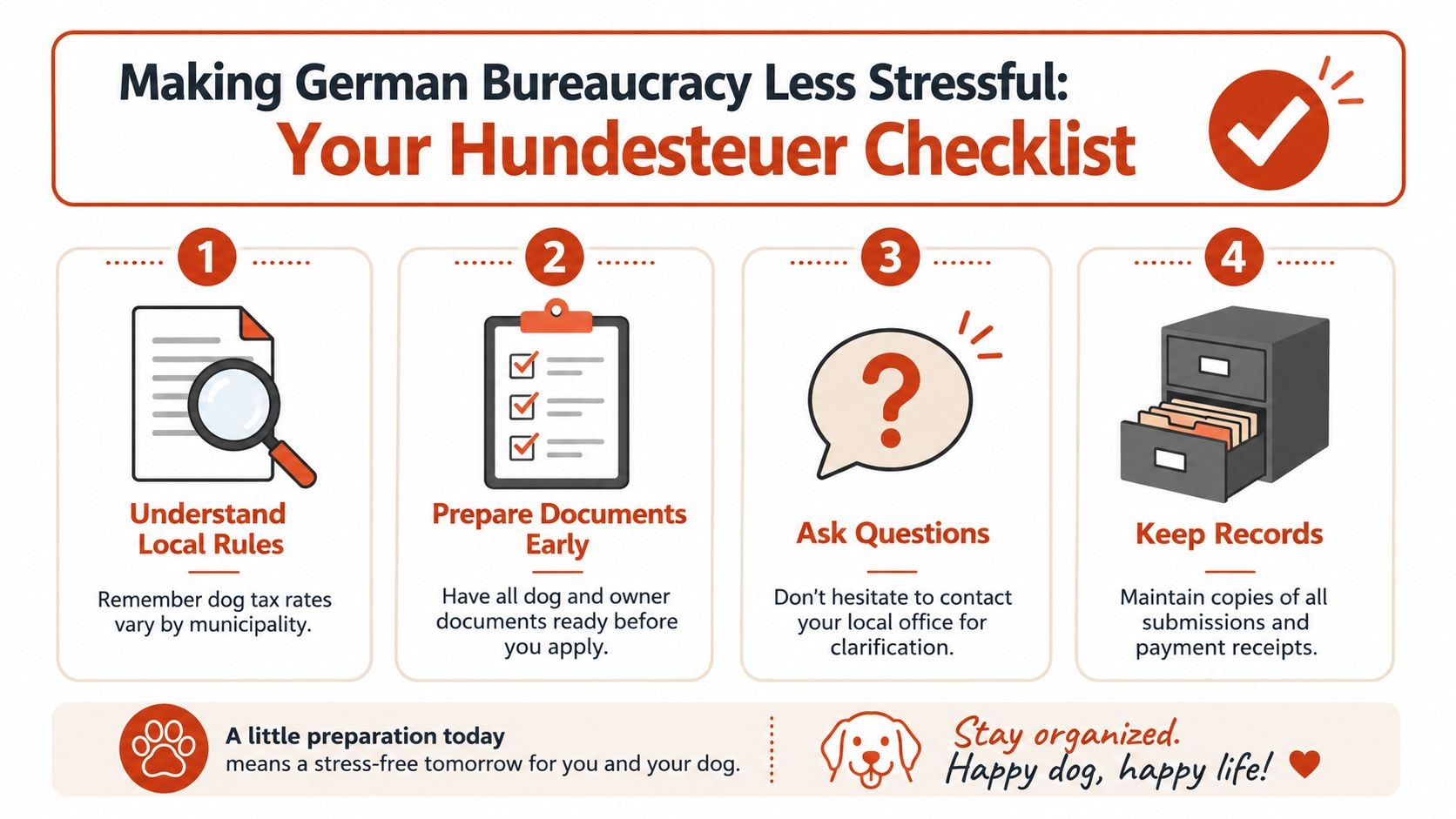
For Berlin newcomers, the most useful version is simple:
-
Confirm your municipality's rate
-
Register within the required timeline
-
Save your tax letter and payment proof
-
Check exemption rules locally if your case is special
-
Get help fast if an official letter arrives and you're unsure what it means
If German paperwork tends to become overwhelming once it reaches the letter stage, support with German letter and paperwork help in Berlin can be a practical first step.
A final visual recap helps if you want one place to glance before you start:
You don't need to love German bureaucracy. You just need a calm next step, and then the next one after that.
If you are stuck on a Hunderegister form, an official letter, document organization, or a routine German phone call about dog registration, book a SettlyGo helper. SettlyGo can help with practical communication, document organization, appointment preparation, note-taking, and routine administrative tasks. SettlyGo does not provide tax advice, legal advice, veterinary advice, insurance brokerage, certified translation, sworn interpretation, application filing, or official representation.
Need practical help in Berlin?
Book a verified SettlyGo helper for German phone calls, appointments, landlord communication, apartment viewings, and document preparation.