Register a Baby’s Birth in Berlin: A Guide for Foreign Parents
August 3, 2026 · 12 min read
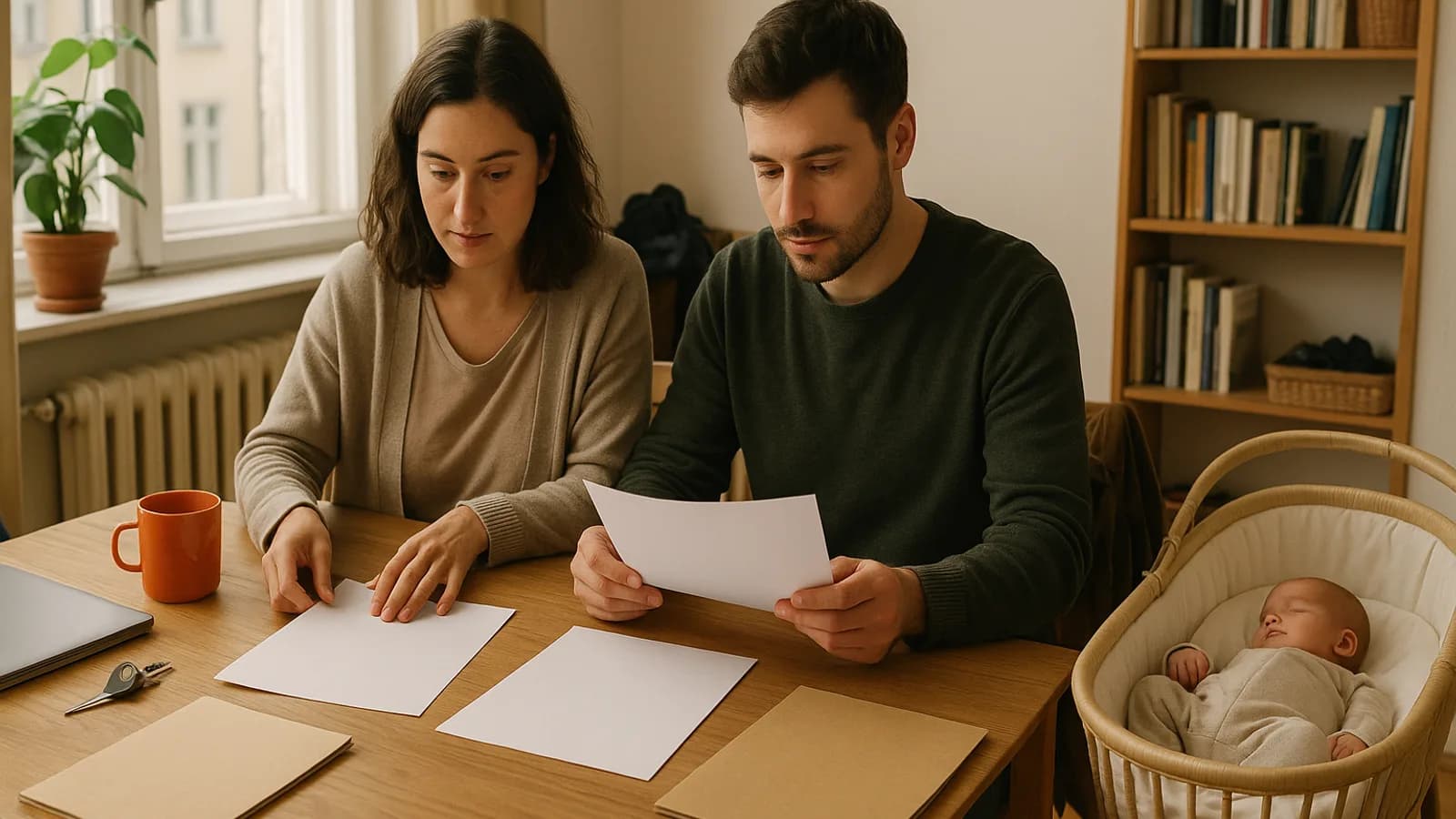
Having a baby in Berlin creates several administrative steps at once. The first is the registration and certification of the birth at the responsible Standesamt.
For foreign parents, this process can take longer when the authority needs original civil-status documents, German translations, an apostille or legalisation, or clarification about the child’s name under another country’s law.
The most important distinction is this:
- The hospital or birth centre normally reports the birth to the Standesamt.
- The Standesamt then checks the parents’ documents, records the birth and issues the birth certificates.
A hospital notification does not mean the certificates are automatically ready. Parents still need to provide the documents required for the certification.
Important scope: This article provides general administrative information, not legal or immigration advice. SettlyGo can help you organize visible requirements, prepare questions, make ordinary German phone calls and communicate with a hospital or Standesamt. SettlyGo does not determine parentage, custody, nationality, residence rights or naming law; certify translations; authenticate documents; submit declarations as your official representative; access authority accounts or credentials; or guarantee registration, certificate issuance or processing times.
The direct answer
A child born in Berlin must be registered with the Standesamt responsible for the district where the birth happened. The parents’ home address does not determine responsibility.
Berlin’s official birth-registration service explains:
- A hospital or birth centre normally sends the birth notification directly to the responsible Standesamt.
- For a home birth, the parents must present the birth confirmation from the midwife, doctor or birth attendant to the responsible Standesamt within one week.
- The Standesamt may need original identity and civil-status documents from the parents.
- Foreign-language documents normally require a German translation from a translator sworn in Germany.
- Some foreign public documents also require an apostille or legalisation.
- Once the birth is certified, Berlin provides three free purpose-specific certificates for Elterngeld, Kindergeld and health insurance.
The main official starting point is Berlin’s service page for registering a child’s birth.
Which Standesamt handles the birth?
The responsible office is based on the place of birth, not where the parents live.
Examples:
- A family lives in Neukölln, but the baby is born in a hospital in Mitte: the responsible Standesamt is in the district of the hospital.
- The parents live outside Berlin, but the child is born in Berlin: the Berlin Standesamt for the birth district handles the registration.
- A home birth takes place in Pankow: the Pankow Standesamt handles the birth notification and certification.
Do not automatically contact the Standesamt responsible for your Anmeldung address. Check the hospital district or ask the hospital’s birth-registration office which Standesamt receives its notifications.
Hospital, birth centre and home-birth procedures
Birth in a hospital or birth centre
The hospital or birth centre normally sends the official birth notification to the Standesamt.
Many hospitals also collect the parents’ supporting documents and name declaration and forward them together. The exact local process differs, so ask the hospital:
- Which documents it collects
- Whether it accepts originals before or after the birth
- Whether copies are made and originals returned immediately
- Whether the name declaration is completed at the hospital
- How extra birth certificates are ordered
- Whether the Standesamt may contact you directly
The hospital reports that the birth happened. The Standesamt still decides whether the documentation is sufficient to create the civil-status record.
Home birth
For a home birth, a midwife, doctor or other authorized birth attendant issues a birth confirmation.
Berlin states that the parents must present this confirmation to the responsible Standesamt within one week. Contact the office promptly and check its submission procedure instead of waiting for a standard Bürgeramt appointment.
Core documents commonly required
Berlin’s official checklist includes several core documents. The exact requirements depend on marital status, nationality, previous marriages, custody arrangements and the law relevant to the child’s name.
Birth notification
For a hospital or birth-centre birth, the institution transmits it.
For a home birth, the parents submit the confirmation from the medical professional or birth attendant.
Parents’ valid identity documents
The Standesamt normally needs valid passports or identity cards from the parents.
Check that:
- Names are spelled consistently across all documents
- The passports are valid
- Previous and current surnames are clearly documented
- Transliteration is consistent for names originally written in another alphabet
Mother’s birth certificate
Berlin lists the mother’s birth certificate among the required documents.
Father’s birth certificate when applicable
The father’s birth certificate may also be required, particularly when parentage or name information must be recorded.
Marriage certificate when applicable
Married parents normally need their marriage certificate.
A foreign marriage certificate may need translation and authentication. A multilingual or international certificate can sometimes reduce translation needs, but confirm acceptance with the responsible Standesamt.
Acknowledgement of paternity when applicable
When the parents are not married, an effective Vaterschaftsanerkennung may be needed before the father can be entered in the birth record.
The acknowledgement and the mother’s consent are separate legal declarations. Do not assume that listing the father on a hospital form replaces the formal process.
Custody declaration when applicable
If the unmarried parents have made a joint custody declaration, the Standesamt may require it.
Evidence of divorce or a previous spouse’s death
If the mother is divorced or widowed, Berlin may require the marriage certificate plus evidence that the marriage ended, such as a final divorce judgment, a dissolution notation or a death certificate.
Foreign divorce decisions can create additional recognition questions. Ask the Standesamt early rather than assuming the foreign judgment alone is sufficient.
Name declaration
The parents may need to submit a signed declaration covering the child’s first name and family name.
Berlin states that both parents can sign the official form or provide a signed informal declaration. Hospitals often include this in their birth-registration paperwork.
Do not finalize the spelling casually. The recorded name will be used for later certificates, passports, insurance and residence documents.
Foreign documents: originals, translations and authentication
This is often the most important part for newcomer families.
Originals are normally required
Berlin states that the required certificates and documents generally need to be presented in the original.
The authority warns against altered, perforated or laminated civil-status documents. Keep originals in their existing form and use a protective folder rather than modifying them.
German translations
Documents not issued in German normally require translation by a translator sworn in Germany.
Do not use:
- An informal translation by a friend
- A machine translation
- A self-translated document
- A translation provider without confirming whether the Standesamt accepts it
SettlyGo does not provide certified or sworn translations. A helper can support an ordinary phone call to ask which format and translator qualification the office expects.
Transliteration of names
Berlin specifically notes that names in documents originally issued in Arabic, Greek, Hebrew or Cyrillic scripts must be transliterated according to recognized standards.
This matters because different spellings across passports, birth certificates, marriage certificates and translations can cause questions or delays.
Before ordering a translation, compare the spelling in:
- Each parent’s passport
- Residence documents
- Existing German civil-status records
- Marriage and birth certificates
- The intended spelling for the child
Ask the translator and Standesamt how an apparent mismatch should be handled. Do not edit a certificate or instruct a translator to hide a difference.
Apostille or legalisation
Berlin states that documents from some countries require additional authentication.
Depending on the issuing country and document, this may involve:
- An apostille issued by the competent authority in the country of origin
- Legalisation through a German diplomatic mission
- Another verification procedure when standard authentication is unavailable
The apostille or legalisation must normally be attached to or directly connected with the original document.
Check the requirement before the birth when possible. Obtaining authentication from abroad after delivery can take time.
Naming the child
Naming can be straightforward when all documents and national laws point to the same result. It can become more complex when parents have different nationalities, different surnames or a marriage registered under foreign law.
The Standesamt may need to determine:
- Which law governs the child’s family name
- Whether the parents already share a married name
- Whether a separate name declaration is needed
- Whether a foreign name structure can be entered as requested
- How names should be transliterated
Berlin recommends consultation with the responsible Standesamt when one or both parents are not German, because further documents and name-law questions may arise.
Practical preparation:
- Decide the intended first names and exact spelling.
- Compare family names on all passports and certificates.
- Identify earlier name declarations or marriage-name decisions.
- Ask the Standesamt whether an appointment or additional declaration is needed.
- Do not book travel or submit passport applications until the recorded name is confirmed.
SettlyGo can help you prepare questions and organize communication. It cannot determine the legally available surname or provide legal advice about naming law.
Birth certificates and free purpose-specific copies
After the Standesamt completes the birth registration, it can issue birth certificates.
Berlin currently states that parents receive three free certificates intended for:
- Elterngeld
- Kindergeld
- Health insurance
These purpose-specific copies are not necessarily replacements for ordinary certificates needed for passports, consulates, residence permits or personal records.
Berlin currently lists the following fees on the birth-registration service page:
- €12 for a birth certificate for private use
- €12 for a certified copy from the birth register
- €12 for an international birth certificate
- €6 for each additional certificate of the same type ordered at the same time
Check current prices before ordering because fees can change.
Ordinary birth certificate
This is the standard certificate used for many administrative purposes.
International birth certificate
The international version is multilingual and may be useful for authorities abroad. It does not automatically eliminate every foreign authentication or translation requirement.
Certified copy from the birth register
This contains more detailed register information and later changes. It may be requested for particular legal procedures, but it is not necessary for every ordinary application.
Order only what you need, but consider whether a consulate or immigration authority will require an ordinary, international or certified version.
What happens after the birth certificate?
Birth registration is only one part of the newborn administration process.
Depending on the family’s situation, later steps may include:
- Adding the child to health insurance
- Applying for Kindergeld
- Applying for Elterngeld
- Applying for the child’s passport or travel document
- Applying for a residence permit for a foreign child born in Germany
- Clarifying nationality with the relevant consulate or authority
- Applying for a Kita-Gutschein later
Do not assume the German birth certificate automatically proves German citizenship or grants a residence permit.
Berlin has a separate official service for the residence permit of a foreign child born in Germany. The requirements depend on the parents’ residence titles and other circumstances.
SettlyGo can help organize practical next-step checklists and communication, but it does not determine citizenship, immigration status or eligibility for benefits.
Common reasons for delays
Contacting the wrong Standesamt
Responsibility follows the birth location, not the parents’ residential district.
Providing copies instead of originals
Berlin generally requires original civil-status documents.
Missing authentication
A translation does not replace an apostille or legalisation when authentication is required.
Using an unaccepted translation
Confirm that the translator is sworn in Germany and that the format meets the office’s requirements.
Different spellings of the same name
Inconsistent transliteration can require clarification.
Missing divorce or death evidence
Previous marital status can affect which documents are required.
Incomplete paternity or custody declarations
Hospital paperwork does not replace formal declarations.
Unclear surname choice
International naming questions may require consultation or a separate declaration.
Assuming the hospital completed everything
The hospital submits the birth notification, but the Standesamt still needs enough evidence to certify the birth.
Booking travel before certificates and passports are ready
Avoid making non-refundable plans based on an assumed processing date.
A practical document checklist
Before sending or presenting documents, confirm:
- I identified the Standesamt responsible for the district where the baby was born.
- The hospital or birth centre confirmed how it sends the birth notification.
- For a home birth, I contacted the Standesamt within the one-week deadline.
- Both parents’ valid passports or identity documents are available.
- The mother’s original birth certificate is available.
- The father’s original birth certificate is available when required.
- The marriage certificate is available when applicable.
- Paternity acknowledgement and consent are complete when applicable.
- The custody declaration is available when applicable.
- Divorce, death or other evidence about earlier marriages is available when relevant.
- Foreign documents have accepted German translations.
- Apostilles or legalisations are attached when required.
- Name spellings and transliterations are consistent.
- Both parents signed the required name declaration.
- I checked which ordinary, international or register certificates I need.
- I kept secure copies of documents and correspondence.
How SettlyGo can support you
SettlyGo provides practical, non-legal administrative and communication support.
A local helper can assist with tasks such as:
- Organizing a document checklist
- Helping identify the responsible Standesamt
- Preparing questions for the hospital or authority
- Supporting an ordinary German phone call
- Helping communicate about missing documents or certificate collection
- Accompanying you to an administrative appointment for practical communication support
SettlyGo does not establish parentage, make custody or naming declarations, determine citizenship or residence rights, authenticate documents, provide certified translations, access official accounts, impersonate a parent, or guarantee that the Standesamt will accept documents or issue certificates by a particular date.
Final takeaway
For a baby born in Berlin, the responsible Standesamt is determined by the place of birth.
The hospital normally submits the birth notification, but the parents still need to provide the identity and civil-status documents required for certification. Foreign parents should prepare originals, accepted German translations, authentication where required, and consistent name spellings as early as possible.
When a document or name question is unclear, contact the responsible Standesamt before ordering expensive translations or making travel plans.
For practical help organizing the checklist or preparing a German phone call to a hospital or Standesamt, book SettlyGo support.
Need practical help in Berlin?
Book a verified SettlyGo helper for German phone calls, appointments, landlord communication, apartment viewings, and document preparation.